
 English
 русский
 Français
 Español
 عربى
Noticias de la industria
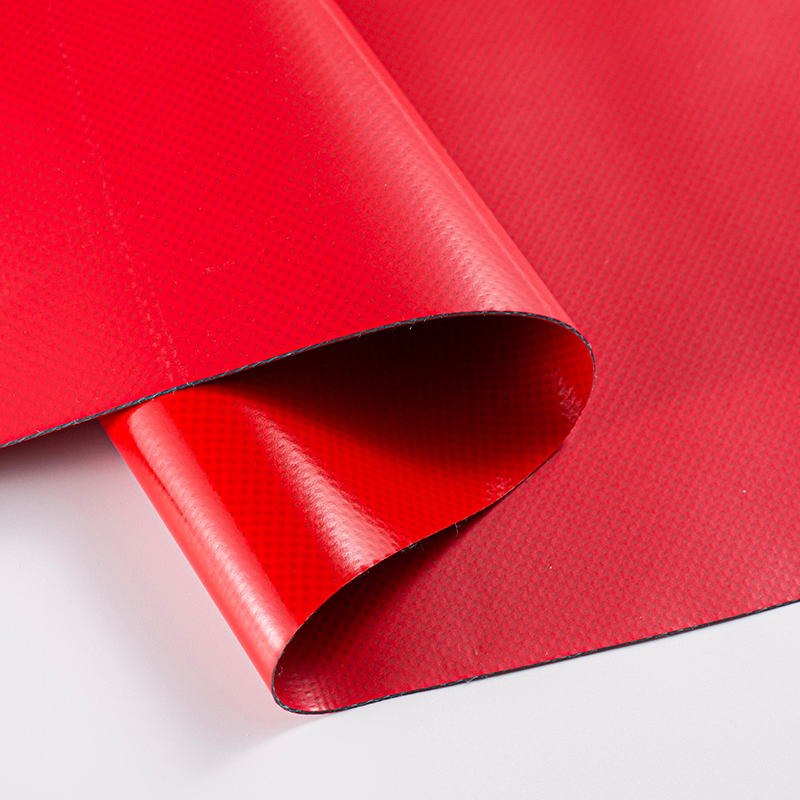
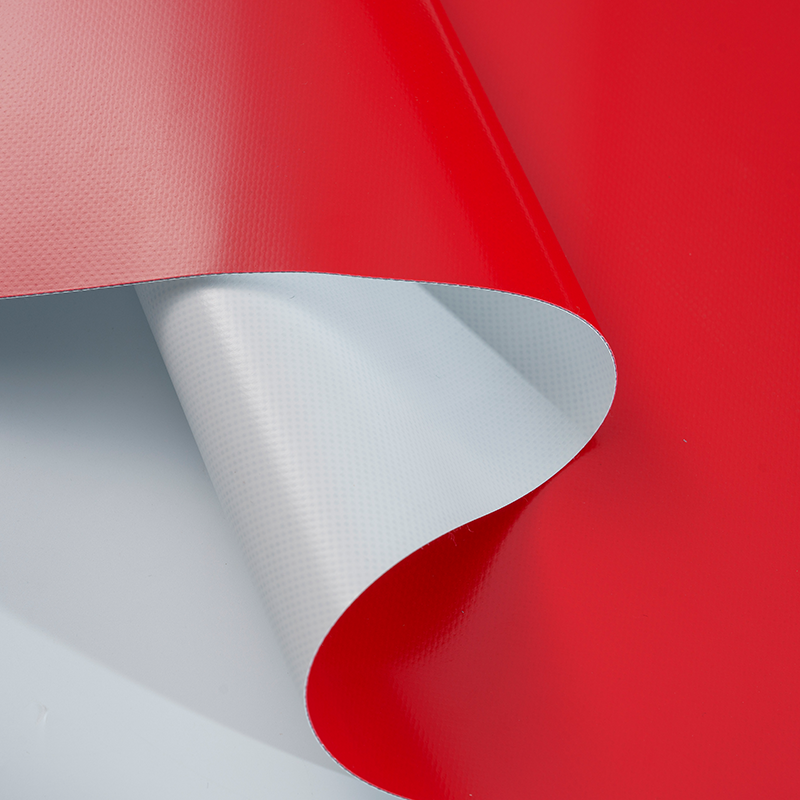 JT-1200 PVDF Coated PVC Architectural Membrane FabricDouble-sided PVC-coated architectural membrane with PVDF/acrylic surface treatment, high-strength polyester base and UV/weather resistance for roof and facade projects.View Product →
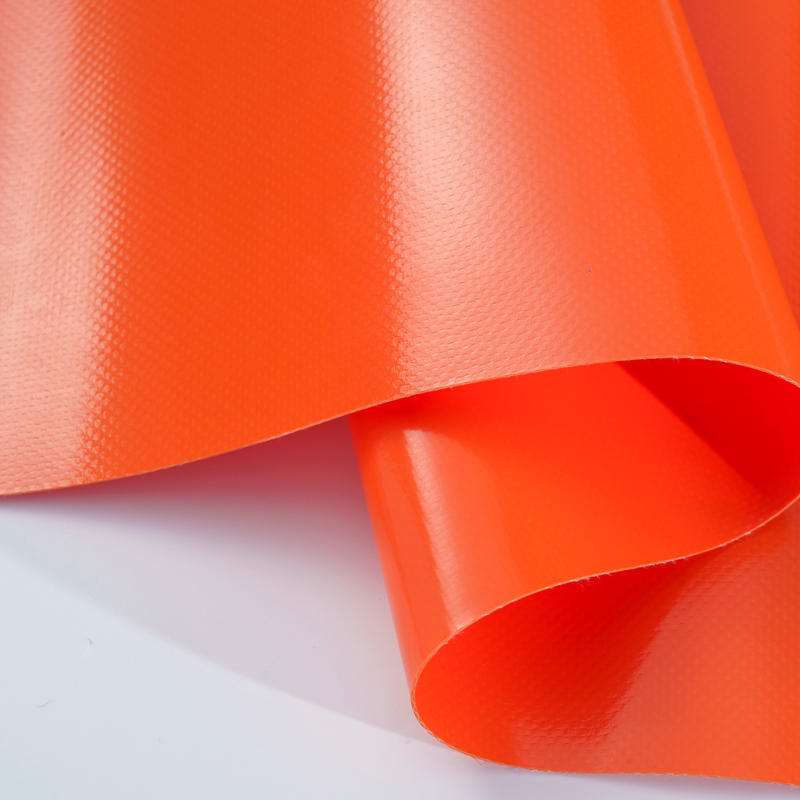
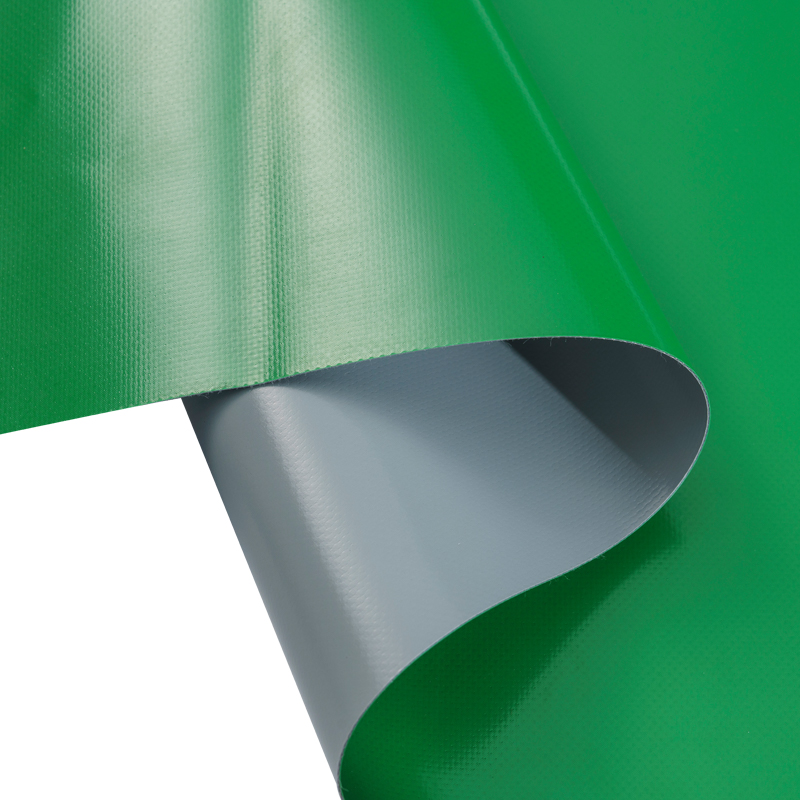 1000D 850gsm PVC Coated Fabric for InflatablesHeavy-duty double-sided PVC fabric on 1000D polyester base, with high tensile and tear strength and weldability for inflatable structures and air-supported equipment.View Product →
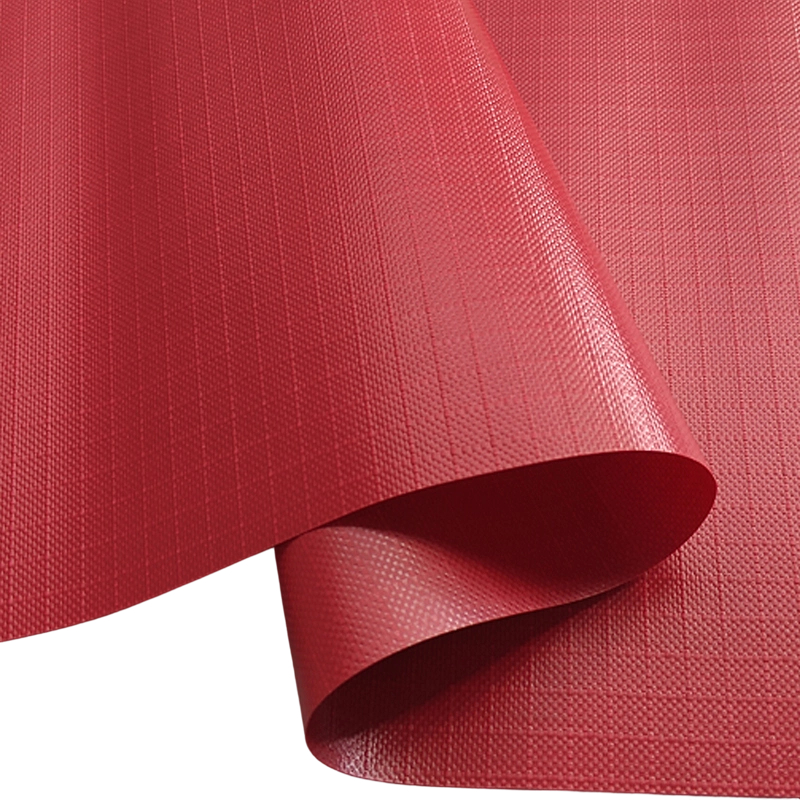
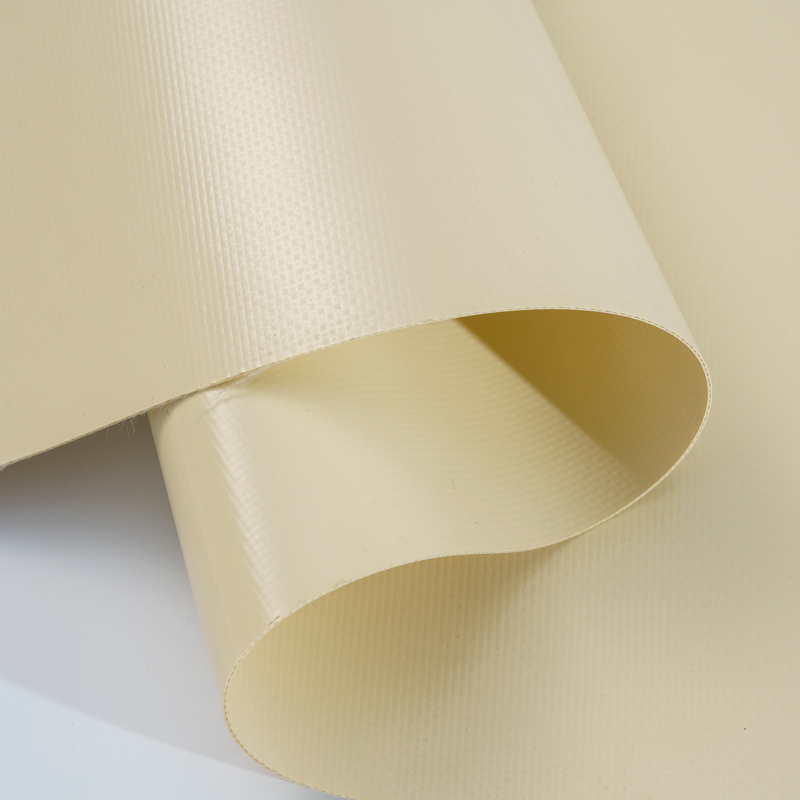 650gsm Heavy Duty PVC Tarpaulin for Truck CoversDouble-sided PVC-coated 1000D polyester tarpaulin at 650 g/m², positioned for truck covers and outdoor protective covering where abrasion and fatigue margin matter.View Product →
Polyvinyl Chloride Membrane Guide: Base Cloth, Coating Weight and Seams
Contenido
- 1 What a Polyvinyl Chloride Membrane Really Covers
- 2 How a Polyvinyl Chloride Membrane Is Built
- 3 How to Read a PVC Membrane Datasheet
- 4 Gram Weight Bands and Where They Fit
- 5 Seams, Welding and Joint Detailing
- 6 Matching the Membrane to the Application
- 7 Climate, Chemicals and Site Conditions
- 8 Buying from a Manufacturer Rather Than a Catalogue
- 9 Six Mistakes That Keep Appearing in PVC Membrane Orders
- 10 Frequently Asked Questions About Polyvinyl Chloride Membrane
- 10.1 Is a polyvinyl chloride membrane the same as PVC tarpaulin?
- 10.2 What gram weight should I choose for a tensile canopy?
- 10.3 Can a PVC membrane be welded in cold weather?
- 10.4 How long does a coated PVC membrane last?
- 10.5 What is the difference between acrylic and PVDF topcoat?
- 10.6 Why do two 650 gsm fabrics behave differently on the same welding machine?
- 10.7 Do you supply both coated and laminated PVC materials?
- 10.8 What should be in a request for quotation?
- 11 Where to Go Next
A procurement officer forwards a package with one line item: "polyvinyl chloride membrane, white, 1050 gsm, hot-air welded, 12,000 m²." Three suppliers quote. One comes back 38 percent below the other two, and all three confirm they meet the specification. Nothing in the paperwork explains the gap, because the paperwork never asked the four questions that actually decide the outcome: which base cloth, how much of the weight is coating, which topcoat, and how the seams will be tested.
The short answer, before the detail: a polyvinyl chloride membrane is a chemistry, not a product. Under that single name you can buy a coated woven fabric for a tensile canopy, a scrim-reinforced sheet for a flat roof, a 400 gsm truck curtain, a 900 gsm inflatable skin, or a PVC-impregnated mesh for shade screening. They share a polymer family and very little else. Price comparison only becomes meaningful once base cloth, coating weight, topcoat system and seam method are fixed on paper.
This guide is written from the manufacturing side of that conversation. It explains how coated PVC membranes are built, which numbers on a datasheet deserve a second look, where gram weight ranges come from, how seams fail, and how to structure a purchase order so that the roll delivered matches the sample approved. It is intended for specifiers, fabricators, converters, contractors and trading companies who buy coated PVC materials rather than finished consumer goods.
Two membranes at the same total gram weight can behave completely differently, because base cloth and coating split decide performance, not the headline number.
What a Polyvinyl Chloride Membrane Really Covers
The term reaches a factory inbox attached to at least four unrelated purchasing conversations. A structural engineer means a woven polyester fabric coated with PVC and finished with a topcoat, tensioned across a steel frame. A roofing contractor means a single-ply sheet made from PVC plies laminated around a polyester scrim. A logistics company means a curtainsider side panel that has to survive fork-lift contact and winter cold. A fabricator of inflatables means a 1000D base cloth with double-sided coating that must hold air at a seam. All four call it a PVC membrane.
The confusion is not purely linguistic. Single-ply roofing sheets and coated architectural fabrics are both flexible PVC-based sheets, and they are both welded on site, so they get grouped together in tenders. But the manufacturing route differs. Roofing membranes are usually built from calendered or extruded PVC film, sometimes reinforced with a polyester mat or scrim, and the sheet is characterized by thickness in millimetres. Coated fabrics are built from a woven base cloth that is passed through a coating line, and the sheet is characterized by weight in grams per square metre plus yarn specification. Asking a coated-fabric plant to quote a 1.5 mm roofing sheet is like asking a paper mill for a bottle.
| Membrane family | How it is built | Typical use | First thing to verify |
|---|---|---|---|
| Architectural membrane fabric | Woven polyester base cloth, PVC coating, acrylic or PVDF topcoat | Tensile canopies, shade structures, atrium and stadium roofs | Coating adhesion and weld strength |
| Single-ply roofing membrane | PVC plies laminated around a polyester scrim or fabric backing | Flat and low-slope roof waterproofing | Sheet thickness and seam method |
| Truck cover and side curtain fabric | High-tenacity polyester base with PVC coating, roughly 400 to 900 gsm | Curtainsiders, flatbeds, bulk transport | Tear strength and cold flexibility |
| Inflatable fabric | 1000D polyester base, double-sided PVC coating, 550 to 900 gsm | Inflatables, air beams, temporary structures | Ply adhesion and air retention |
| Cover material and tarpaulin | Woven base with PVC coating, roughly 550 to 750 gsm | Agriculture, industrial and stockpile covers | Weight tolerance and UV package |
| PVC mesh fabric | Polyester scrim impregnated with PVC | Fence screening, shade and reinforcement | Mesh count and coating pick-up |
There is also a naming habit worth knowing. Some buyers say "polyvinyl chloride membrane" when they mean the coated fabric, and "PVC tarpaulin" when they mean the same material at a lower weight. Others reserve "membrane" for anything that will be welded rather than sewn. Because the vocabulary is loose, the fastest way to close a quotation gap is not to argue about the word but to send a specification template back with four fields that must be filled: yarn specification, base cloth weave, coating weight per side, and topcoat chemistry.
Before comparing prices, agree on the family, the base cloth and the coating split. Until then, the quotes are for different products wearing the same name.
How a Polyvinyl Chloride Membrane Is Built
The base cloth carries the load
In a coated fabric, the woven polyester base carries the mechanical load and the PVC carries the weather. Base cloth is described by yarn linear density, weave, and finished weight. A 1000D yarn is thick and strong, which is why it appears across inflatable fabric and heavy transport covers. Finer yarns allow a denser, smoother cloth that coats more evenly and takes a cleaner print. Weave matters just as much: a plain weave gives balanced strength and a tight surface, a panama weave gives a flatter, heavier hand with better coating penetration, and a ripstop structure introduces thicker reinforcement yarns at intervals to interrupt tear propagation.
Two cloths at the same finished weight can differ significantly in tear strength because of yarn tenacity, crimp, and heat setting. A tightly crimped yarn gives a thicker, softer hand but allows more elongation under load, which is why some architectural fabrics are specified with a maximum elongation rather than a minimum breaking strength. For a tensile structure, the design software assumes a spring stiffness for the fabric. If the delivered cloth is stiffer or softer than the assumed value, the geometry of the built structure changes, and so does the load path into the frame.
Coating and lamination are not the same process
Coating means depositing a PVC paste onto the cloth and fusing it in an oven. Lamination means bonding a pre-made PVC film to the cloth, using either hot lamination or cold lamination with an adhesive. Coating tends to give better penetration into the weave and a more integrated composite; lamination tends to give more precise thickness control and a smoother surface. Many plants run both routes, which is why a coated fabric manufacturer can supply a product described as laminated on one line and coated on another.
For inflatables, the coating is applied on both faces, and the adhesion between coating and cloth becomes the critical property. An inflatable is a pressure vessel made of cloth. If the coating lifts from the base, the seam may still hold while the panel blisters. Double-sided coating at 550 to 900 gsm on a 1000D base is the common construction range, with heavier weights used where the panel spans a wider unsupported distance or where abrasion from ground contact is expected.
The topcoat decides how the surface ages
Bare PVC is a workable surface for a few seasons and a troublesome one after that. Plasticiser migrates, dirt bonds to the surface, and the colour shifts. A topcoat slows this down. Acrylic topcoats are the economical option: they improve cleanability and reduce surface tack at modest cost, and they suit shade structures, tent fabric and general covers where the service life expectation sits in the single digits. PVDF topcoats cost more but hold gloss and colour far better under UV, and they shed dirt rather than absorb it, which matters on a light-coloured canopy where cleaning access is difficult.
Industrial-grade PVDF differs from a standard PVDF finish mainly in film thickness and coverage rather than in the polymer itself. On a large architectural roof, the difference shows up in how the surface reads after several summers: a thin finish can thin further at high-wear zones such as ridge lines and fixing points. That is why projects with long design lives, high UV loads or a requirement to retain colour contrast tend to specify the heavier topcoat rather than the standard one.
JT-1200 PVDF Coated PVC Architectural Membrane FabricDouble-sided PVC-coated architectural membrane with PVDF/acrylic surface treatment, high-strength polyester base and UV/weather resistance for roof and facade projects.View Product →
Base cloth decides strength and stretch, coating decides weather protection, and the topcoat decides how the membrane looks after three summers.
How to Read a PVC Membrane Datasheet
Most disputes between a buyer and a supplier do not come from a bad product. They come from a datasheet that was read as a guarantee when it was really a description. The fields below are the ones worth slowing down for, and each has a follow-up question that separates a real specification from a marketing line.
| Datasheet field | What it actually tells you | Question to send back |
|---|---|---|
| Total weight (gsm) | Combined base cloth plus coating weight | How much of that figure is coating? |
| Coating weight (gsm) | Polymer available for UV, abrasion and welding | Is it single-side or double-side, and per face or total? |
| Grab tensile (N) | Short-span strength of the composite | Warp and weft, or warp only? |
| Trapezoidal tear (N) | Resistance to crack propagation at a fixing point | Tested on coated fabric or on base cloth? |
| Coating adhesion (N/5cm) | Whether the coating stays bonded to the cloth | Which method and which conditioning? |
| Weld shear strength | Whether seams approach parent-material strength | What welding window is recommended? |
| Cold flex or cold crack | Behaviour during winter installation and handling | At what temperature and after how many cycles? |
| Fire classification | Reaction to fire for the intended market | Which standard, which test body, which report number? |
The most common trap is the gram weight figure. A "1050 gsm" coated fabric might be 700 gsm of base cloth with 350 gsm of coating, or 850 gsm of base with 200 gsm of coating. Both are 1050 gsm. The first has generous polymer for welding and abrasion resistance; the second has more yarn and will be stronger in tension but thinner at the seam. Which is correct depends entirely on whether the membrane is carrying load or facing weather. A tent fabric and a tensile roof at the same total weight are built to opposite priorities.
The second trap is a single-value tensile figure with no direction stated. Coated woven fabrics are anisotropic: warp and weft strength differ, and so does elongation. A quotation that shows one number cannot be compared to one that shows four. Ask for warp and weft, and ask for the test method, because grab tensile and strip tensile produce different numbers from the same roll.
The third trap is silence on conditioning. Adhesion and tear results shift with temperature and humidity during testing. A supplier who states the conditioning is easier to hold to a result later than one who simply lists a value.
Ask for the coating split, directional tensile values and the test method. A single gram weight number is a starting point, never a specification.
Gram Weight Bands and Where They Fit
Weight is the fastest way to place a PVC membrane in the market, but only within a family. A 650 gsm inflatable fabric and a 650 gsm truck cover may share a number and share almost nothing else, because the base cloth and coating split differ. The chart below shows the bands that typically appear across coated PVC membrane lines, so a buyer can quickly judge whether an offer sits inside a normal range for the intended job.
Typical gram weight bands across coated PVC membrane lines (gsm)
Inflatable fabric
550–900
Truck cover fabric
400–900
Cover material
550–750
0300600900
The truck cover band is the widest because the job is the widest. A 400 gsm fabric with a ripstop structure makes sense where the curtain is handled often and weight matters for the driver; a 650 gsm fabric makes sense where the load is abrasive or the cover is expected to last through several resale cycles; a 900 gsm sheet belongs on side curtains that take regular impact and where the extra stiffness does not cause handling problems. Choosing the top of the band for every job is a common error that raises cost and makes the curtain harder to operate.
The inflatable band clusters between 550 and 900 gsm because pressure retention and abrasion resistance both scale with coating mass. Double-sided coating at 550 gsm works for smaller decorative inflatables, while 850 gsm and above appears where panels are large, seams are long, or ground contact is frequent. The cover material band sits in a narrower window because those products are usually cut, hemmed and eyeleted rather than welded into a structural shape, so the balance between tear strength and flexibility matters more than weld tolerance.
Two practical notes on reading the chart. First, the numbers are total weight, and a supplier quoting "750 gsm" without stating the coating share has told you less than it appears. Second, the top of a band is not automatically better. A heavier membrane is stiffer, harder to fold, and more demanding on welding equipment, so matching weight to handling conditions is as important as matching it to strength requirements.
Use gram weight to place a product inside its family, then confirm the coating split before assuming the heavier option is the safer one.
Seams, Welding and Joint Detailing
Most field failures in PVC membrane work are seam failures. The parent material rarely tears across a panel; the joint opens, the weld peels, or the edge detail pulls out of its fixing. That pattern makes seam testing the single highest-value item in a factory acceptance conversation, and it is usually the item missing from the purchase order.
Hot-air welding is the standard method for coated PVC, with the weld temperature, speed and pressure set by the material weight and the equipment. A heavier coating gives a wider working window because there is more polymer to fuse; a thin coating leaves a narrow band where the material is either under-welded or scorched. This is why a fabricator who changes from one 650 gsm supplier to another at the same weight can suddenly see seam failures: the coating thickness and plasticiser package changed, and the welding parameters were never re-established.
Two quality controls make the difference. The first is a trial weld at the start of each shift or each roll lot, peeled by hand and inspected for a cohesive failure inside the coating rather than a clean separation at the interface. The second is a destructive test at defined intervals through the production run, with results recorded against the lot number. Both are cheap. Neither is common enough.
- Confirm the recommended welding window in writing, including temperature and speed range, for the exact product code ordered.
- Ask whether the quoted weld strength is seam shear, seam peel, or both, and request the method used.
- Specify lap width and edge treatment, because a narrow lap on a heavy fabric concentrates stress at the weld toe.
- For structural work, request welded sample coupons from the actual production lot, not from a stock sample.
- Check that edge reinforcement, hemming and hardware detailing are compatible with the coating weight, since thin coatings cut through more easily under a grommet.
The reinforcement detail deserves its own note. A membrane is only as strong as the point where it meets the structure. Pockets, keder edges, cable reinforcement and plate fixings all introduce stress concentrations, and the coating weight at those points determines whether the material creeps or cuts. On heavier architectural work, additional layers or a heavier base cloth at the perimeter is normal practice, and it should appear in the specification rather than being left to the fabricator's judgement.
Specify the welding window and demand recorded destructive tests on the delivered lot. Seam quality is a process control issue, not a material property.
Matching the Membrane to the Application
Selection becomes much simpler once the application is fixed, because each application imposes a different dominant requirement. The paragraphs below walk through the main ones, and the logic is the same in each case: identify the load case, then identify the exposure, then choose weight and topcoat to satisfy both without over-specifying.
Construction and architecture
Architectural membrane fabric sits at the demanding end of the coated fabric range. It has to hold a pre-stressed shape for years, resist UV and pollution, accept welding on site under imperfect conditions, and maintain appearance on surfaces that are difficult to clean. Coating adhesion and weld consistency matter more than raw tensile strength, because the structure is designed around a known fabric strength and the real risk is localised failure rather than global overload.
The specification usually names the topcoat system and the fire classification for the jurisdiction. Buyers should also confirm translucency if the design relies on daylight, since a heavier coating reduces light transmission and can change the interior lighting strategy. For projects in coastal or industrial atmospheres, the case for a heavier topcoat is stronger, because the surface is exposed to salt or chemical fallout that accelerates chalking and dirt pick-up.
1000D 850gsm PVC Coated Fabric for InflatablesHeavy-duty double-sided PVC fabric on 1000D polyester base, with high tensile and tear strength and weldability for inflatable structures and air-supported equipment.View Product →
Transport and side curtains
Truck covers and side curtains are abuse-tolerant products, and the specification should be written around abuse rather than around elegance. Tear strength, cold flexibility and edge durability drive service life. A curtain that cracks when rolled at minus temperatures, or a cover that splits at a lashing point after two seasons, is a warranty problem regardless of its tensile figure.
The commonly used range runs from 400 gsm ripstop structures for lighter duty through 510 and 610 gsm for general freight to 650 gsm for heavy use, with 900 gsm appearing on side curtains where impact and abrasion are routine. Buyers in cold climates should ask specifically about cold flex performance, and buyers in hot climates should ask about plasticiser retention, because a membrane that stiffens in the first summer will crack in the first winter.
650gsm Heavy Duty PVC Tarpaulin for Truck CoversDouble-sided PVC-coated 1000D polyester tarpaulin at 650 g/m², positioned for truck covers and outdoor protective covering where abrasion and fatigue margin matter.View Product →
Inflatables and air structures
Inflatables are a pressure problem disguised as a fabric problem. The critical properties are ply adhesion, coating continuity, and seam strength under sustained load. A pinhole or a thin spot in the coating becomes a leak path; a poorly bonded coating blisters under pressure. Double-sided coating on a 1000D base, from 550 gsm upward, is the conventional construction, with heavier weights selected where panels are large, where the item is inflated and deflated frequently, or where ground abrasion is expected.
Agriculture, aquaculture and industrial covers
These applications tolerate less glamorous materials but demand reliability over long outdoor exposure. UV resistance, resistance to mould and to agricultural chemicals, and a coating weight that survives wind flap all matter. Wind flap is underrated as a failure mode: a cover that oscillates in the wind fatigues at every eyelet and hem, so the edge detail and the coating weight at the edge often determine service life more than the field strength of the sheet.
Leisure and events
Event work puts a premium on handling and appearance. The membrane is folded, transported, installed by crews who are not always gentle, and expected to look presentable under lighting. A smoother coated surface cleans better, a well-controlled topcoat resists scuffing, and consistent colour between rolls matters because panels from different lots end up side by side.
Across all five areas, the pattern is consistent: the correct membrane is the lightest one that satisfies the dominant requirement with a margin the buyer can justify. Over-specifying weight raises cost, stiffness and handling difficulty without improving the outcome.
Name the dominant requirement first, then choose weight and topcoat. Membrane selection fails when weight is used as a proxy for suitability.
Climate, Chemicals and Site Conditions
Two identical membranes installed in different climates will not age the same way. High UV with high ambient temperature accelerates plasticiser migration and topcoat erosion. Cold climates stress flexibility, especially during installation when the material is unrolled and welded in conditions well below the temperature at which it was tested. Coastal sites bring chloride, industrial sites bring sulphur compounds and hydrocarbons, and agricultural sites bring ammonia and silage acids.
For each of these, the response is a specific question rather than a generic reassurance. For UV, ask about the topcoat system and the colour fastness data. For cold, ask about cold flex results at the installation temperature, not at room temperature. For chemical exposure, ask which substances the coating was tested against and for how long. For sites with grease or oil, ask whether the coating package was formulated for hydrocarbon contact, because standard plasticised PVC can swell when exposed to oils over time.
Design detailing matters as much as chemistry. Standing water on a membrane concentrates dirt and biological growth; trapped moisture under a cover encourages mould; sharp edges at fixings cut coatings. A heavier coating gives more sacrificial material at these points, but it cannot compensate for a detail that holds water against the surface for years.
Match the membrane to the site, not to the catalogue. UV, cold, chemicals and detailing each call for a different answer.
Buying from a Manufacturer Rather Than a Catalogue
There is a practical difference between buying coated PVC material from a manufacturer, from a supplier who converts, and from a wholesaler who holds stock. A manufacturer can adjust coating weight, topcoat system, colour and roll dimensions within the limits of its lines, and can tell you which parameters are fixed and which are flexible. A stockist can deliver quickly from inventory but cannot change the construction. A trader can be efficient for small mixed orders but adds a layer between the technical question and the person who can answer it.
For project work, the useful first conversation is not about price per square metre. It is about capability: which coating weights can be produced on the line, whether double-sided coating is available, which topcoats are stocked, what the tolerance on total weight is, and what the minimum order is for a custom colour. Answers to those five questions will tell you more about fit than a quotation sheet.
- State the application and the dominant requirement, not just the product name.
- Give the base cloth specification or accept a recommendation with written reasoning.
- Ask for the coating split as a condition of quotation.
- Request a sample roll from the same production lot as the bulk order.
- Agree the weight tolerance and the roll dimension tolerance in writing.
- Confirm packaging, pallet format, roll core size and labelling requirements.
- Agree the inspection method, whether third-party inspection is required, and who bears the cost.
- Ask which test reports are issued with the shipment and in which language.
Samples deserve particular attention. A stock swatch proves that the colour exists; it does not prove that the production lot will match it. The reliable approach is to approve a sample cut from the actual production run, seal it, and reference the lot number in the purchase order. For colour-critical work, ask how the supplier controls colour between lots and what deviation is accepted.
Finally, treat lead time as a technical parameter. A short lead time on a custom coating weight usually means the material is being slit from existing stock rather than produced to order, which may be perfectly acceptable for a repair job and completely wrong for a project with a fixed installation date. Getting that distinction clear at the quotation stage prevents an expensive conversation later.
Buy capability, not inventory. The five questions about line limits, coating sides, stocked topcoats, weight tolerance and minimum order reveal more than any price list.
Six Mistakes That Keep Appearing in PVC Membrane Orders
- Specifying total weight only. Without the coating split, two suppliers can meet the number and deliver products with different welding behaviour, different abrasion resistance, and different service life.
- Copying a previous specification without checking the application. A membrane that performed well as a shade sail may be entirely wrong as a truck curtain, because the load case and the handling regime changed.
- Changing supplier without re-qualifying the weld. Welding parameters belong to a material, not to a machine. A new lot needs a new trial weld.
- Ignoring installation temperature. Cold flex data matters most at the moment the material is being installed, which is exactly when nobody checks it.
- Approving a stock swatch instead of a production sample. The swatch proves a colour exists; the production sample proves the line can reproduce it.
- Leaving edge detailing to the fabricator. Reinforcements, hems and fixings are where membranes fail, and they should be specified, not improvised.
Five of the six mistakes are specification problems, not production problems, which means they can be eliminated before the order is placed.
Frequently Asked Questions About Polyvinyl Chloride Membrane
Is a polyvinyl chloride membrane the same as PVC tarpaulin?
Often yes, in everyday trade usage. Both describe a polyester base cloth coated with PVC. The word "membrane" tends to appear where the material is engineered for a structural or waterproofing duty and will be welded, while "tarpaulin" tends to appear where it will be cut, hemmed and eyeleted. The material may be identical; the application and the finishing differ.
What gram weight should I choose for a tensile canopy?
Weight alone is not the right starting point. Architectural work is specified by tensile strength, elongation, coating adhesion, topcoat system and fire classification. Once those are fixed, the weight follows. A supplier asked only for a weight will be guessing about the rest.
Can a PVC membrane be welded in cold weather?
Welding is possible in cold conditions with appropriate equipment and preheating, but the limiting factor is usually the material's flexibility during handling, not the weld itself. Check cold flex performance at the expected installation temperature and allow the material to acclimatise before welding.
How long does a coated PVC membrane last?
Service life depends on UV exposure, topcoat system, coating weight, mechanical stress and detailing. Acrylic-topcoated materials in moderate climates typically sit in a shorter service band than PVDF-topcoated materials in the same location, but any figure should be treated as a planning assumption rather than a guarantee unless it is backed by documented weathering data for that specific construction.
What is the difference between acrylic and PVDF topcoat?
Acrylic improves cleanability and reduces surface tack at lower cost. PVDF holds gloss and colour better and sheds dirt more effectively under high UV. Industrial-grade PVDF uses a heavier film for demanding exposures. The right choice depends on design life, cleaning access and the appearance standard the client expects.
Why do two 650 gsm fabrics behave differently on the same welding machine?
Because the coating share and the plasticiser package differ. One may have 250 gsm of coating and the other 350 gsm, and the welding window shifts accordingly. Every new lot should be qualified with a trial weld before production begins.
Do you supply both coated and laminated PVC materials?
Coating and lamination are different processes with different strengths. Coating gives better penetration into the weave; lamination gives more precise thickness control. The choice should follow the application and the required surface finish rather than a general preference.
What should be in a request for quotation?
Application, required service conditions, base cloth preference if any, coating weight split, topcoat system, colour and colour tolerance, roll dimensions, total quantity, delivery location, required documentation, and the inspection method. That list reduces quotation variability far more than any single clause about price.
Most procurement questions about PVC membrane reduce to one point: define the construction before discussing the price.
Where to Go Next
A polyvinyl chloride membrane rewards a specification-first approach. Decide the application, identify the dominant requirement, fix the base cloth and coating split, choose the topcoat for the exposure, and agree the welding window and test method before the order goes out. Everything else, including price, follows from those decisions.
Useful next reads
For buyers comparing offers across several suppliers, the fastest way to separate a real quotation from a hopeful one is to send the same four-field template to every bidder and compare the answers rather than the totals. A supplier who can fill in the coating split, directional tensile values, topcoat system and welding window is telling you something about how the material will be produced. One who returns only a weight and a price is telling you something too.
Define the construction, qualify the seam, approve a production sample, and the rest of the PVC membrane purchase becomes predictable.
Relacionado Productos

Damos una cálida bienvenida a clientes nacionales y extranjeros para que visiten nuestra fábrica, negocien acuerdos de cooperación y construyan juntos un futuro brillante.
Información de contacto
- +86-13967331581
- +86-550-2356878
info@kingtexfabric.com
Dirección
- N.º 12, Calle Weiyi, Zona de Desarrollo Económico del Condado de Laian, Chuzhou, Anhui, China.
Póngase en contacto
© Anhui Kingtex Material Technology Co, Ltd. Reservados todos los derechos.
